Annapurna Circuit Trek: Journey Through a Himalayan Masterpiece

Overview

Embark on one of the world’s most legendary treks, circling the mighty Annapurna massif. Journey through an incredible variety of landscapes, from lush forests to high-altitude deserts. Experience the rich cultural tapestry of diverse ethnic communities along the way. Conquer the challenging Thorong La pass (5,416m) for breathtaking Himalayan vistas. Discover why this classic adventure offers an unparalleled blend of nature and culture.

Journey Through a Himalayan Masterpiece: The Annapurna Circuit

Often hailed as one of the finest treks on the planet, the Annapurna Circuit offers an adventure of incredible scale and diversity. This legendary route circumnavigates the colossal Annapurna massif, leading you through a breathtaking cross-section of Nepal’s landscapes and cultures that few other treks can match.

A Constantly Changing Panorama:

Prepare to be amazed as the scenery transforms almost daily. Your journey begins in the lower Marsyangdi River valley, walking through lush green paddy fields, subtropical forests, and charming villages inhabited by Gurung communities. As you ascend, the landscape shifts dramatically – oaks and pines give way to sparser vegetation, eventually opening into the wide, arid expanses of the Manang district (3,540m), reminiscent of the Tibetan plateau. Here, the Manangi people offer a unique cultural experience against a backdrop of stunning peaks.

Culture Around Every Corner:

The Annapurna Circuit is not just about mountains; it’s a deep dive into the rich cultural mosaic of Nepal. You’ll encounter the distinct traditions, architecture, and lifestyles of numerous ethnic groups, including Gurungs, Manangis, Thakalis, and more, providing unparalleled cultural immersion.

The Thrill of the Thorong La:

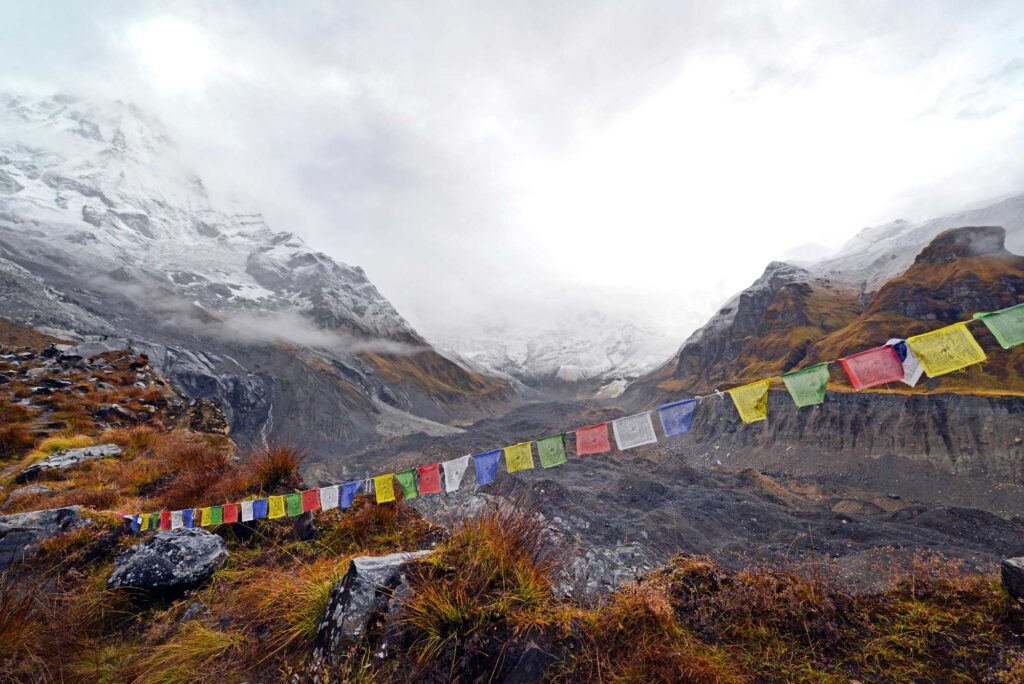
The physical and literal high point of the trek is crossing the formidable Thorong La pass (5,416m). The ascent requires careful acclimatization, culminating in a challenging but incredibly rewarding crossing. Reaching the prayer-flag-adorned summit unveils truly awe-inspiring panoramic views across the Himalayas before you begin the steep descent.

Descent into the Kali Gandaki:

After the pass, you’ll reach the sacred pilgrimage site of Muktinath, revered by both Hindus and Buddhists. From here, the trail descends into the Kali Gandaki Valley, famous for being the deepest gorge in the world, carving its path between the giants of Annapurna I and Dhaulagiri I. You’ll pass through ancient villages like Kagbeni, a gateway to the restricted Upper Mustang region, experiencing the unique Thakali culture.

Route Options & Considerations:

While road construction has impacted certain sections in recent years, numerous alternative trekking trails (often called NATT trails) allow trekkers to bypass many road segments and preserve the walking experience. The classic circuit traditionally finished by trekking all the way out via Ghorepani Poon Hill to Pokhara. However, modern itineraries often conclude earlier – perhaps flying from Jomsom or driving from Muktinath or Tatopani – offering flexibility depending on your time and preference.

This trek demands good physical fitness and preparation for high altitudes. With the right planning and spirit of adventure, the Annapurna Circuit promises an unforgettable journey through the heart of the Nepalese Himalayas.


Annapurna Circuit Itinerary (15 Days)

  • Day 01: Travel to Trailhead & First Steps: Drive from Kathmandu or Pokhara to Besisahar (approx. 5-7 hrs). Continue by local jeep/bus along the developing road to Syange (approx. 2-3 hrs). Begin your trek with a short walk to Jagat (1,300m). (Approx. 7-10 hrs travel, 1-2 hrs trek)
  • Day 02: Into the Marsyangdi Valley: Trek from Jagat, following the Marsyangdi River upstream through scenic villages and forests to Danakyu (2,300m). (Approx. 6-7 hrs trek)
  • Day 03: Approaching the Manang Region: Continue trekking through forests, passing waterfalls and enjoying views that open up as you reach Chame (2,670m), the administrative headquarters of Manang district. (Approx. 5-6 hrs trek)
  • Day 04: Pine Forests & Mountain Views: Trek from Chame through dense pine forests. Cross the Marsyangdi River multiple times and enjoy stunning views of Annapurna II and Pisang Peak as you arrive in Pisang (3,300m).(Approx. 5-6 hrs trek)
  • Day 05: High Route to Ngawal (Optional but Recommended): Take the scenic upper route via Ghyaru and Ngawal (3,660m) for outstanding panoramic views of the Annapurna range, before descending slightly towards Manang. (Alternatively, take the lower, easier route directly to Manang). Arrive in Nawal for overnight. (Approx. 6-7 hrs trek – Upper Route)
  • Day 06: Arrival in Manang: Trek from Ngawal, enjoying the high desert landscapes and Tibetan-influenced culture, to the large village of Manang (3,540m). (Approx. 3-4 hrs trek)
  • Day 07: Acclimatization in Manang: Essential rest day for acclimatization. Explore Manang village, visit monasteries, or take an optional side trip (e.g., hike to Gangapurna Lake, Praken Gompa, or potentially the challenging Ice Lake – discuss with guide).
  • Day 08: Climbing Towards the Pass: Ascend gradually from Manang through alpine pastures to Yak Kharka (4,050m) or Letdar (4,200m), keeping an eye out for blue sheep or yaks. (Approx. 4-5 hrs trek)
  • Day 09: To Thorong Phedi: Continue the ascent to Thorong Phedi (4,450m), the base camp before the pass. Rest and prepare for the early start tomorrow. (Some may ascend further to High Camp (4,925m) today, but Phedi is recommended for better acclimatization). (Approx. 3-4 hrs trek)
  • Day 10: Crossing the Thorong La Pass: A long, challenging day! Start very early (pre-dawn) to climb to the summit of Thorong La Pass (5,416m), marked by prayer flags. Enjoy the incredible views, then begin the long descent to the sacred site of Muktinath (3,760m). (Approx. 8-10 hrs trek)
  • Day 11: Muktinath Exploration & Kagbeni: Explore the Muktinath temple complex, a holy site for Hindus and Buddhists. Afterwards, trek down through arid landscapes to Kagbeni (2,800m), an ancient village on the edge of Upper Mustang. (Approx. 3-4 hrs trek)
  • Day 12: Down the Kali Gandaki to Marpha: Trek along the Kali Gandaki riverbed (can be windy!) to Jomsom (administrative centre, airport), and continue to the charming Thakali village of Marpha (2,670m), famous for its apple orchards and brandy. (Approx. 5-6 hrs trek)
  • Day 13: Continued Descent: Continue trekking down the valley, passing through more villages and observing the changing vegetation as you descend significantly to Ghasa (2,010m). (Approx. 6-7 hrs trek)
  • Day 14: Arrival in Tatopani (Hot Springs!): Trek further down the valley to Tatopani (1,190m), meaning ‘hot water’ in Nepali. Relax and soak your muscles in the natural hot springs. (Approx. 4-5 hrs trek)
  • Day 15: Return Drive to Pokhara: Take a local bus or jeep from Tatopani to Beni (approx. 2-3 hrs), then continue the drive back to Pokhara (approx. 4-5 hrs). (Approx. 6-8 hrs total driving)

Important Note: This is a sample itinerary. Due to road access developing in parts of the Annapurna region, the trek can be customized and shortened (e.g., to 9-12 days). Options include starting the trek further up the Marsyangdi valley (like Syange or Chame), flying out from Jomsom after Muktinath, or driving from Muktinath/Tatopani. Please discuss possibilities based on your time and interests.

What’s Included in the Price:

  • Guide: Services of a licensed, professional, English-speaking trekking guide (Grade A).
  • Porter Service: Porter service to carry luggage during the trek (typically one porter for two trekkers, specific weight limits apply – please inquire).
  • Meals: Standard breakfast, lunch, and dinner at tea houses along the trekking route.
  • Accommodation: Accommodation in standard tea houses/lodges during the trek.
  • Permits: All necessary trekking permits:
    • Annapurna Conservation Area Permit (ACAP)
    • Trekkers’ Information Management System (TIMS) Card
  • Transportation: Ground transportation required as per the agreed itinerary:
    • Drive from Kathmandu or Pokhara to the trek starting point (e.g., Besisahar/Syange).
    • Drive from the trek ending point (e.g., Tatopani/Beni) back to Pokhara. (Note: Specific start/end points depend on the final itinerary; domestic flights like Jomsom-Pokhara are typically excluded unless specified).
  • Equipment Use: Use of a company sleeping bag and trekking poles for the duration of the trek.
  • Water Purification: Water purification tablets/solution for safe drinking water.
  • Staff Costs: Salary, food, accommodation, equipment, and insurance for the guide and porters.
  • Taxes: All applicable government taxes and official expenses.

What’s Not Included in the Price:

  • Personal Insurance: Your personal travel insurance policy, which must cover high-altitude trekking and emergency helicopter evacuation.
  • Personal Expenses: Costs of a personal nature, including your own trekking clothing, gear, and equipment rentals if needed.
  • Tips: Tips for your guide(s) and porter(s) (tipping is customary in Nepal for good service and greatly appreciated, but remains at your discretion).
  • Drinks & Snacks: All beverages (alcoholic drinks like beer/rum, soft drinks, bottled mineral water) and any extra snacks or meals beyond the standard three provided daily.
  • Tea House Extras: Additional charges at tea houses for services like hot showers, Wi-Fi access, charging electronic devices (mobiles, cameras, etc.).
  • Bottled Water: We strongly encourage using purified local water (provided) to reduce plastic waste in the mountains; any bottled water purchased is an extra expense.
  • Other: Any other costs, services, or activities not explicitly mentioned in the ‘What’s Included’ section (e.g., domestic flights unless specified, visa fees, international airfare).

Book This Trip