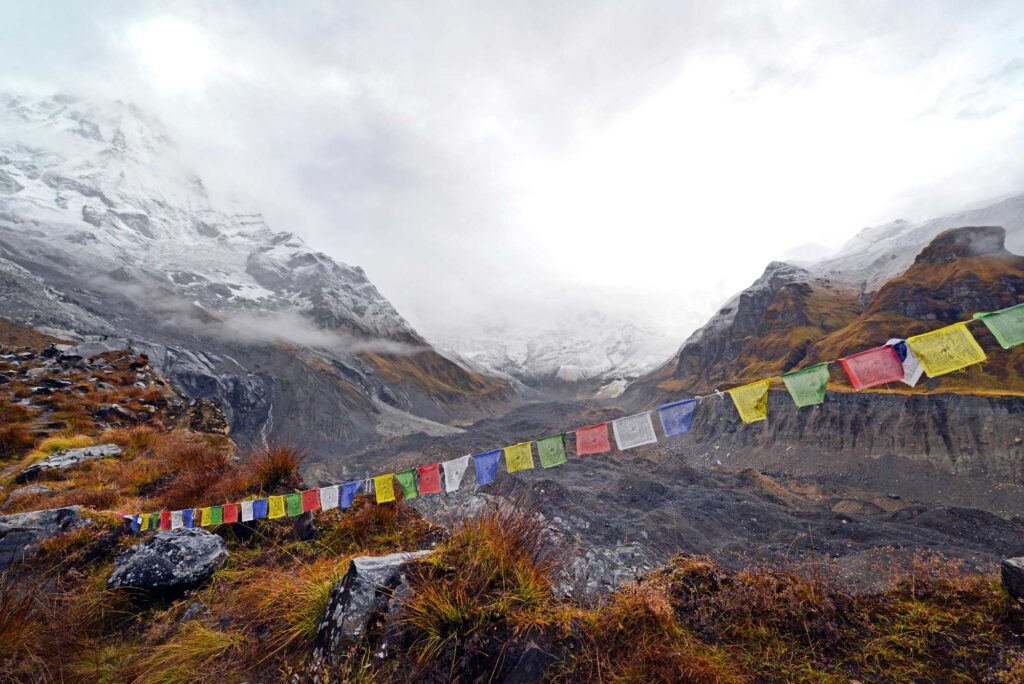
Explore the spectacular Manaslu region, a less-trekked gem around the world’s 8th highest peak.
Challenge yourself on the Manaslu Circuit, crossing the stunning Larkya La pass (5,106m).
Discover the unique, preserved Tibetan culture in the sacred ‘hidden valley’ of Tsum.
Journey through diverse landscapes offering rich biodiversity and breathtaking Himalayan views.
Experience authentic villages and ancient monasteries in this restricted area of Nepal.
Difficulty: strenous
Duration: 20 days
Trip Grade:3
Destinations: Gorkha
Activities: Trekking
Departure Date: On Request
Best Seasons: March-May/Sep-Nov
Highest Altitude: 5100m
Starting – Ending: Arughat/Arughat
Discover the Spirit Mountain: Trekking in the Manaslu Region
Venture into a realm of breathtaking beauty and profound culture in the Manaslu region of west-central Nepal. Dominated by the stunning Mount Manaslu (8,163m / 26,781 ft), the world’s eighth highest peak, this area offers an incredible trekking experience away from the more crowded trails of Nepal. Its name, derived from the Sanskrit word “manasa,” means “Mountain of the Spirit,” hinting at the inspiring landscapes and deep spiritual heritage you’ll encounter. As a restricted region, trekking here requires special permits, preserving its unique character and offering a more exclusive adventure.
The Classic Manaslu Circuit:
Considered one of Nepal’s best all-round treks, the Manaslu Circuit circumnavigates the majestic peak, offering an astonishing variety of scenery. The journey typically follows the deep, winding gorge of the Budhi Gandaki river, ascending through subtropical forests, traditional farming villages, and terraced fields. As you climb higher, the landscape transforms into alpine meadows and eventually nears the dramatic glacial terrain close to the Tibetan border. The trek culminates in the challenging but hugely rewarding crossing of the Larkya La pass (5,106m / 16,752 ft), which unveils spectacular, close-up views of Manaslu, Himalchuli, Ngadi Chuli, Cheo Himal, and others. The descent brings you into the Marsyangdi valley, often connecting with the initial stages of the Annapurna Circuit route. While becoming more accessible with improved tea house facilities, the Manaslu Circuit retains a sense of remoteness and adventure.
Tsum Valley: The Hidden Valley of Happiness
Nestled close to the Tibetan border lies the culturally distinct and sacred Tsum Valley, often referred to as the ‘Beyul’ or ‘Hidden Valley’. Accessible via a detour from the main Manaslu Circuit trail (or as a standalone trek), Tsum offers a journey back in time. Relatively untouched by modern development, this region preserves an ancient Tibetan Buddhist culture, unique dialect, and traditional way of life. You’ll encounter friendly locals, explore ancient monasteries like Mu Gompa and Rachen Gompa, and walk along trails lined with intricately carved Mani walls and chortens, testament to the valley’s deep spiritual significance. Its pristine natural beauty and cultural integrity make trekking here a truly unique and enriching experience.
A Combined Adventure:
For the ultimate exploration, many trekkers choose to combine the Manaslu Circuit with the Tsum Valley trek, creating a longer itinerary (around 3 weeks) that showcases the full spectrum of natural beauty and cultural heritage this incredible region has to offer.
Whether you choose the classic circuit, the hidden valley, or both, the Manaslu region promises an unforgettable Himalayan journey filled with stunning scenery, authentic cultural encounters, and a genuine sense of adventure.
Day 01: Drive Kathmandu/Pokhara to Machha Khola (930m)
Begin with a long but scenic drive from Kathmandu or Pokhara by jeep/bus towards the trailhead. Navigate paved roads initially, then bumpier tracks via Arughat and Soti Khola to reach Machha Khola village.
(Approx. 8-10 hours drive)
Day 02: Trek Machha Khola to Jagat (1,410m)
Start trekking along the Budhi Gandaki River. The trail involves ups and downs, passing small villages and crossing suspension bridges before reaching the village of Jagat, where permits are checked.
(Approx. 6-7 hours trek)
Day 03: Trek Jagat to Philim (1,590m)
Continue following the river, trekking through varied landscapes with more ascents and descents. Pass Salleri and Sirdibas before arriving at the large Gurung village of Philim.
(Approx. 4-5 hours trek)
Day 04: Trek Philim to Chumling (2,363m) – Enter Tsum Valley
Trek past Ekle Bhatti and take the trail junction heading right towards the Tsum Valley (signposted). Cross the suspension bridge over the Budhi Gandaki and climb steeply into the lower Tsum Valley, reaching Chumling.
(Approx. 6-7 hours trek)
Day 05: Trek Chumling to Chhokang Paro (3,010m)
Trek deeper into Tsum Valley, enjoying views of Ganesh Himal. Pass through Rainjam and cross the Serpu Khola before arriving in the larger settlement of Chhokang Paro, consisting of two villages (Chhokang and Paro) on the valley floor.
(Approx. 5-6 hours trek)
Day 06: Trek Chhokang Paro to Nile (3,361m)
Continue through Upper Tsum Valley, passing potato and barley fields. Consider a side trip to the sacred Milarepa Cave (Piren Phu) near Burji village. Arrive in Nile, the last village heading north in Upper Tsum.
(Approx. 4-5 hours trek)
Day 07: Trek Nile to Mu Gompa (3,700m) & Exploration
A shorter trek brings you to Mu Gompa, the largest and most remote monastery in the region, situated high above the valley floor. Settle in and spend the afternoon exploring the monastery complex and enjoying the vast mountain views.
(Approx. 3-4 hours trek + exploration)
Day 08: Explore Mu Gompa Area / Trek towards Rachen Gompa (3,240m)
Option to further explore around Mu Gompa (perhaps hiking towards the Tibetan border viewpoints) or begin the return trek, possibly staying overnight near Rachen Gompa, an ancient nunnery.
(Flexible day, trekking time varies)
Day 09: Trek to Chumling (2,363m)
Continue the descent back down the Tsum Valley, passing through Nile and Chhokang Paro, eventually arriving back in Chumling.
(Approx. 6-8 hours trek)
Day 10: Trek Chumling to Deng (1,860m) – Rejoin Manaslu Trail
Descend from Chumling back to the Budhi Gandaki river, cross the suspension bridge near Lokpa, and rejoin the main Manaslu Circuit trail. Continue trekking through forests to the village of Deng.
(Approx. 6-7 hours trek)
Day 11: Trek Deng to Namrung (2,630m)
The trail continues through the steep Budhi Gandaki gorge, involving several climbs and descents. Pass Rana and Bihi Phedi, entering a region with stronger Tibetan cultural influence, reaching Namrung village.
(Approx. 6-7 hours trek)
Day 12: Trek Namrung to Lho (3,180m)
Enjoy stunning mountain views beginning to open up, including glimpses of Manaslu itself. Trek through forests and villages like Lihi and Sho before arriving in Lho, known for its large monastery and impressive views.
(Approx. 4-5 hours trek)
Day 13: Trek Lho to Sama Gaon (3,530m)
A shorter trek with fantastic scenery. Pass the village of Shyala with superb views of Manaslu, Himalchuli, and Peak 29 (Ngadi Chuli). Arrive in Sama Gaon, the principal village of the Nubri people, nestled below Manaslu.
(Approx. 3-4 hours trek)
Day 14: Acclimatization Day in Sama Gaon
Essential rest and acclimatization day. Options for exploration include a hike to Manaslu Base Camp (longer day), a visit to the nearby Birendra Tal (glacial lake), or a hike up to Pungyen Gompa viewpoint.
Day 15: Trek Sama Gaon to Samdo (3,860m)
A relatively short day’s trek ascending gently through alpine meadows and yak pastures towards the Tibetan border.Reach Samdo, the last major settlement before the Larkya La pass.
(Approx. 3-4 hours trek)
Day 16: Acclimatization Day in Samdo
Another important day for acclimatization before ascending further. Optional hike towards the Tibetan border (Gya La) or up a nearby ridge for panoramic views. Helps prepare for crossing Larkya La.
(Approx. 3-4 hours optional hike)
Day 17: Trek Samdo to Dharmashala / Larkya Phedi (4,480m)
Continue the ascent across tundra and alongside the Larkya Glacier moraine to reach Dharmashala (also known as Larkya Phedi), a basic lodge providing shelter before the pass crossing. Rest and prepare for an early start tomorrow.
(Approx. 4-5 hours trek)
Day 18: Cross Larkya La Pass (5,106m) & Descend to Bimthang (3,720m)
The most challenging day. Start very early (pre-dawn) for the long climb to the summit of Larkya La Pass, adorned with prayer flags. Enjoy magnificent views, then undertake a long, steep descent to Bimthang (‘Plain of Sand’), a broad valley floor.
(Approx. 8-10+ hours trek)
Day 19: Trek Bimthang to Tilije (2,300m)
Descend through pine and rhododendron forests from Bimthang. Enjoy final close-up views of Manaslu and surrounding peaks. Pass Kharche and Gho before reaching the Gurung village of Tilije.
(Approx. 6-7 hours trek)
Day 20: Trek Tilije to Dharapani (1,960m) & Drive Option
Continue descending to Dharapani, joining the main Annapurna Circuit trail. From here, jeep transport is often available down the valley towards Besisahar. You might end the trek here and start driving, or trek further to Syange (1,100m).
(Approx. 2-3 hrs trek to Dharapani; drive option available)
Day 21: Drive Dharapani / Syange / Besisahar to Kathmandu or Pokhara
Travel by jeep/bus from Dharapani (or wherever you ended the trek/drive yesterday) back towards Besisahar, then continue the drive to either Kathmandu or Pokhara.
What’s Included in the Price (Cost Inclusive):
Guide: Services of a licensed, professional, highly experienced (Grade A+) English-speaking trekking guide.
Porter Service: Porter service for carrying main luggage (typically 1 porter shared between 2 trekkers, with specific weight limits – please inquire). Porters are properly insured and equipped for the trek.
Meals: Standard Breakfast, Lunch, and Dinner during the trek. Meals are typically chosen from the menu available at the tea houses/lodges along the route.
Accommodation: Accommodation in standard available tea houses or lodges during the trek.
Permits: All required trekking permits for this route:
Manaslu Conservation Area Permit (MCAP)
Annapurna Conservation Area Permit (ACAP)
Manaslu Restricted Area Permit (RAP)
Tsum Valley Restricted Area Permit (RAP)
Trekkers’ Information Management System (TIMS) Card (if required based on entry/exit points)
Staff Costs: Salary, food, accommodation, insurance coverage, and necessary equipment for the guide and porters.
Ground Transportation:
Transport from Kathmandu or Pokhara to the trek start point (e.g., Soti Khola / Machha Khola) by public bus or shared jeep.
Transport from the trek end point (e.g., Dharapani / Besisahar) back to Kathmandu or Pokhara by public bus or shared jeep.
(Private transport can be arranged at an additional cost).
Safety Equipment:
Guide carries a basic first-aid kit.
Guide carries a satellite phone or Personal Locator Beacon (PLB) for emergency communication (use subject to signal reception).
Equipment Use: Use of a company-provided sleeping bag and trekking poles (available upon request – please notify in advance).
Safe Drinking Water: Water purification tablets or solution provided for treating safe drinking water (helping to reduce plastic bottle consumption).
What’s Not Included in the Price (Cost Not Inclusive):
Personal Insurance: Your personal travel insurance policy. This must cover high-altitude trekking (up to 5,500m recommended for Larkya La) and emergency helicopter evacuation.
Nepal Visa Fee: Cost for obtaining your Nepal entry visa.
International Airfare: Your flights to and from Nepal.
Personal Expenses: Costs of a personal nature, including your own trekking clothing, gear, souvenirs, etc.
Tips: Tips for your guide(s) and porter(s). (Tipping is customary in Nepal for good service and is greatly appreciated, but the amount remains at your discretion).
Drinks & Snacks: All beverages (alcoholic drinks like beer/rum, soft drinks, bottled mineral water) and any extra snacks or food beyond the standard three meals provided daily.
Tea House Extras: Additional charges at tea houses for services such as:
Hot showers (often powered by gas geysers or solar)
Wi-Fi access (availability varies)
Charging electronic devices (mobiles, cameras, power banks)
Laundry: Any personal laundry services along the trek.
Bottled Water: We strongly encourage using the provided purification methods; any bottled water purchased is an extra expense.
Private Transport: Additional cost if you prefer private vehicle transport instead of the included public/shared options.
Other: Any other costs, services, or activities not explicitly mentioned in the ‘What’s Included’ section.
Day 01: Drive Kathmandu/Pokhara to Machha Khola (930m)
Begin with a long but scenic drive from Kathmandu or Pokhara by jeep/bus towards the trailhead. Navigate paved roads initially, then bumpier tracks via Arughat and Soti Khola to reach Machha Khola village.
(Approx. 8-10 hours drive)
Day 02: Trek Machha Khola to Jagat (1,410m)
Start trekking along the Budhi Gandaki River. The trail involves ups and downs, passing small villages and crossing suspension bridges before reaching the village of Jagat, where permits are checked.
(Approx. 6-7 hours trek)
Day 03: Trek Jagat to Philim (1,590m)
Continue following the river, trekking through varied landscapes with more ascents and descents. Pass Salleri and Sirdibas before arriving at the large Gurung village of Philim.
(Approx. 4-5 hours trek)
Day 04: Trek Philim to Chumling (2,363m) – Enter Tsum Valley
Trek past Ekle Bhatti and take the trail junction heading right towards the Tsum Valley (signposted). Cross the suspension bridge over the Budhi Gandaki and climb steeply into the lower Tsum Valley, reaching Chumling.
(Approx. 6-7 hours trek)
Day 05: Trek Chumling to Chhokang Paro (3,010m)
Trek deeper into Tsum Valley, enjoying views of Ganesh Himal. Pass through Rainjam and cross the Serpu Khola before arriving in the larger settlement of Chhokang Paro, consisting of two villages (Chhokang and Paro) on the valley floor.
(Approx. 5-6 hours trek)
Day 06: Trek Chhokang Paro to Nile (3,361m)
Continue through Upper Tsum Valley, passing potato and barley fields. Consider a side trip to the sacred Milarepa Cave (Piren Phu) near Burji village. Arrive in Nile, the last village heading north in Upper Tsum.
(Approx. 4-5 hours trek)
Day 07: Trek Nile to Mu Gompa (3,700m) & Exploration
A shorter trek brings you to Mu Gompa, the largest and most remote monastery in the region, situated high above the valley floor. Settle in and spend the afternoon exploring the monastery complex and enjoying the vast mountain views.
(Approx. 3-4 hours trek + exploration)
Day 08: Explore Mu Gompa Area / Trek towards Rachen Gompa (3,240m)
Option to further explore around Mu Gompa (perhaps hiking towards the Tibetan border viewpoints) or begin the return trek, possibly staying overnight near Rachen Gompa, an ancient nunnery.
(Flexible day, trekking time varies)
Day 09: Trek to Chumling (2,363m)
Continue the descent back down the Tsum Valley, passing through Nile and Chhokang Paro, eventually arriving back in Chumling.
(Approx. 6-8 hours trek)
Day 10: Trek Chumling to Deng (1,860m) – Rejoin Manaslu Trail
Descend from Chumling back to the Budhi Gandaki river, cross the suspension bridge near Lokpa, and rejoin the main Manaslu Circuit trail. Continue trekking through forests to the village of Deng.
(Approx. 6-7 hours trek)
Day 11: Trek Deng to Namrung (2,630m)
The trail continues through the steep Budhi Gandaki gorge, involving several climbs and descents. Pass Rana and Bihi Phedi, entering a region with stronger Tibetan cultural influence, reaching Namrung village.
(Approx. 6-7 hours trek)
Day 12: Trek Namrung to Lho (3,180m)
Enjoy stunning mountain views beginning to open up, including glimpses of Manaslu itself. Trek through forests and villages like Lihi and Sho before arriving in Lho, known for its large monastery and impressive views.
(Approx. 4-5 hours trek)
Day 13: Trek Lho to Sama Gaon (3,530m)
A shorter trek with fantastic scenery. Pass the village of Shyala with superb views of Manaslu, Himalchuli, and Peak 29 (Ngadi Chuli). Arrive in Sama Gaon, the principal village of the Nubri people, nestled below Manaslu.
(Approx. 3-4 hours trek)
Day 14: Acclimatization Day in Sama Gaon
Essential rest and acclimatization day. Options for exploration include a hike to Manaslu Base Camp (longer day), a visit to the nearby Birendra Tal (glacial lake), or a hike up to Pungyen Gompa viewpoint.
Day 15: Trek Sama Gaon to Samdo (3,860m)
A relatively short day’s trek ascending gently through alpine meadows and yak pastures towards the Tibetan border.Reach Samdo, the last major settlement before the Larkya La pass.
(Approx. 3-4 hours trek)
Day 16: Acclimatization Day in Samdo
Another important day for acclimatization before ascending further. Optional hike towards the Tibetan border (Gya La) or up a nearby ridge for panoramic views. Helps prepare for crossing Larkya La.
(Approx. 3-4 hours optional hike)
Day 17: Trek Samdo to Dharmashala / Larkya Phedi (4,480m)
Continue the ascent across tundra and alongside the Larkya Glacier moraine to reach Dharmashala (also known as Larkya Phedi), a basic lodge providing shelter before the pass crossing. Rest and prepare for an early start tomorrow.
(Approx. 4-5 hours trek)
Day 18: Cross Larkya La Pass (5,106m) & Descend to Bimthang (3,720m)
The most challenging day. Start very early (pre-dawn) for the long climb to the summit of Larkya La Pass, adorned with prayer flags. Enjoy magnificent views, then undertake a long, steep descent to Bimthang (‘Plain of Sand’), a broad valley floor.
(Approx. 8-10+ hours trek)
Day 19: Trek Bimthang to Tilije (2,300m)
Descend through pine and rhododendron forests from Bimthang. Enjoy final close-up views of Manaslu and surrounding peaks. Pass Kharche and Gho before reaching the Gurung village of Tilije.
(Approx. 6-7 hours trek)
Day 20: Trek Tilije to Dharapani (1,960m) & Drive Option
Continue descending to Dharapani, joining the main Annapurna Circuit trail. From here, jeep transport is often available down the valley towards Besisahar. You might end the trek here and start driving, or trek further to Syange (1,100m).
(Approx. 2-3 hrs trek to Dharapani; drive option available)
Day 21: Drive Dharapani / Syange / Besisahar to Kathmandu or Pokhara
Travel by jeep/bus from Dharapani (or wherever you ended the trek/drive yesterday) back towards Besisahar, then continue the drive to either Kathmandu or Pokhara.
What’s Included in the Price (Cost Inclusive):
Guide: Services of a licensed, professional, highly experienced (Grade A+) English-speaking trekking guide.
Porter Service: Porter service for carrying main luggage (typically 1 porter shared between 2 trekkers, with specific weight limits – please inquire). Porters are properly insured and equipped for the trek.
Meals: Standard Breakfast, Lunch, and Dinner during the trek. Meals are typically chosen from the menu available at the tea houses/lodges along the route.
Accommodation: Accommodation in standard available tea houses or lodges during the trek.
Permits: All required trekking permits for this route:
Manaslu Conservation Area Permit (MCAP)
Annapurna Conservation Area Permit (ACAP)
Manaslu Restricted Area Permit (RAP)
Tsum Valley Restricted Area Permit (RAP)
Trekkers’ Information Management System (TIMS) Card (if required based on entry/exit points)
Staff Costs: Salary, food, accommodation, insurance coverage, and necessary equipment for the guide and porters.
Ground Transportation:
Transport from Kathmandu or Pokhara to the trek start point (e.g., Soti Khola / Machha Khola) by public bus or shared jeep.
Transport from the trek end point (e.g., Dharapani / Besisahar) back to Kathmandu or Pokhara by public bus or shared jeep.
(Private transport can be arranged at an additional cost).
Safety Equipment:
Guide carries a basic first-aid kit.
Guide carries a satellite phone or Personal Locator Beacon (PLB) for emergency communication (use subject to signal reception).
Equipment Use: Use of a company-provided sleeping bag and trekking poles (available upon request – please notify in advance).
Safe Drinking Water: Water purification tablets or solution provided for treating safe drinking water (helping to reduce plastic bottle consumption).
What’s Not Included in the Price (Cost Not Inclusive):
Personal Insurance: Your personal travel insurance policy. This must cover high-altitude trekking (up to 5,500m recommended for Larkya La) and emergency helicopter evacuation.
Nepal Visa Fee: Cost for obtaining your Nepal entry visa.
International Airfare: Your flights to and from Nepal.
Personal Expenses: Costs of a personal nature, including your own trekking clothing, gear, souvenirs, etc.
Tips: Tips for your guide(s) and porter(s). (Tipping is customary in Nepal for good service and is greatly appreciated, but the amount remains at your discretion).
Drinks & Snacks: All beverages (alcoholic drinks like beer/rum, soft drinks, bottled mineral water) and any extra snacks or food beyond the standard three meals provided daily.
Tea House Extras: Additional charges at tea houses for services such as:
Hot showers (often powered by gas geysers or solar)
Wi-Fi access (availability varies)
Charging electronic devices (mobiles, cameras, power banks)
Laundry: Any personal laundry services along the trek.
Bottled Water: We strongly encourage using the provided purification methods; any bottled water purchased is an extra expense.
Private Transport: Additional cost if you prefer private vehicle transport instead of the included public/shared options.
Other: Any other costs, services, or activities not explicitly mentioned in the ‘What’s Included’ section.